

30 July 2026 · 2 min read
What Happens to Your Payment History on Stripe, Square, PayPal and SumUp
Stripe builds a purchase-history score and shares it with every other merchant on its network. Artega never sees a balance, so there's nothing to score or share.
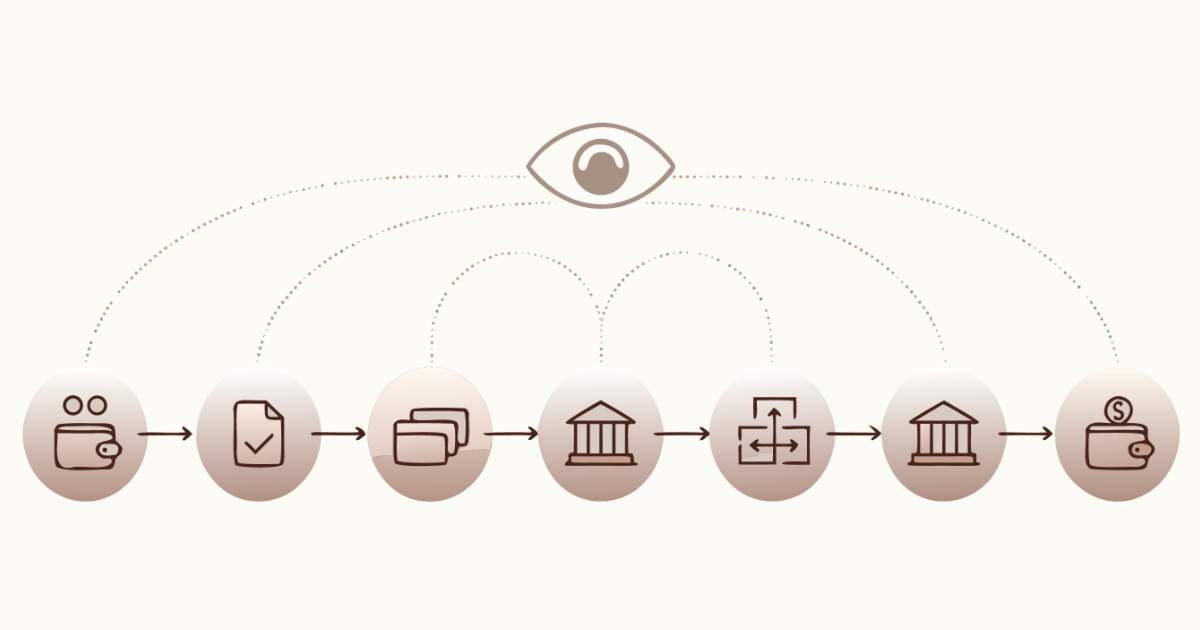
What Happens to Your Payment History on Stripe, Square, PayPal and SumUp
Stripe builds a "Risk Insights" score from your purchase history and shares it with every other merchant that uses Stripe, so it can follow a client into stores they've never visited. A federal judge has already let privacy claims over this proceed. Artega never sees a balance in the first place, so there's nothing to score, share, or follow anyone with.
What Stripe actually does with your payment history
When a client pays through a business that uses Stripe, Stripe doesn't just process that one payment. It builds a running score, internally called Risk Insights, based on that client's purchase history across every merchant Stripe touches. That score then gets shared with other businesses using Stripe, whether or not the client has ever bought from them before.
This isn't a hypothetical. A group of plaintiffs took Stripe to court over exactly this, and a federal judge allowed the privacy claims to proceed rather than dismissing them outright. That's a meaningful signal: the practice was substantial enough, and the objection credible enough, that the case wasn't thrown out at the first opportunity.
Why this matters if you're the one taking the payment
You're not just handing a processor a transaction. You're handing them a data point that gets folded into a profile neither you nor your client ever agreed to, and that profile keeps working long after the payment clears. Your client's booking with you becomes an input into how they get treated, marketed to, or scored somewhere else entirely.
Where Artega is different
Artega never holds a balance. Your client pays by card, similar to how they'd pay anywhere else. Behind the scenes, our payment partner Wert converts that payment to stablecoin and sends it straight to your own wallet. Artega doesn't sit in the middle watching what gets paid for, so there's no purchase history sitting on our side to build a score from, let alone share with anyone else.
That's not a policy promise you have to trust. It's a structural fact: you can't share what you never collected.
The takeaway
If you use Stripe, your client's payment with you becomes part of a score that follows them elsewhere. If you use Artega, it doesn't, because there's no balance, no score, and no sharing mechanism sitting behind the transaction to begin with.
This is a sensitive and evolving area of consumer privacy law; nothing here is legal advice. See the source case for the underlying claims.